Timbre (musical concept)
Hayden's TimbreTimbre (musical concept) is the quality that distinguishes one sound from another beyond pitch. The book defines it through a comparison between instruments: a guitar and a piano may play the same note, yet each produces its own recognizable tone. The concept therefore becomes more than a piece of musical vocabulary. It provides a compact language for individuality, vocal texture, emotional perception, and the way separate people can belong to the same composition without becoming interchangeable.
Definition and Explanation
Timbre explains why identical notes do not sound identical when produced by different instruments. Hayden Devillier gives the clearest definition when he explains to Crew Devillier that it is the tone an instrument makes, using a guitar and a piano playing the same note as his example. Crew first hears Timbre’s name as though it were “timber,” the word associated with a falling tree, but Hayden corrects him and places the name within the language of a musical score. The exchange turns a potentially comic misunderstanding into a precise explanation of sound: pitch alone cannot account for musical identity.
The definition also carries an implicit contrast between sameness and distinction. Two instruments can share a note while retaining different textures, resonances, and expressive effects. That principle is especially apt in a story structured around musicians and relationships. It offers a way to understand identity not as isolation, but as a distinctive quality that remains audible within a shared arrangement.
Timbre in the Performance World
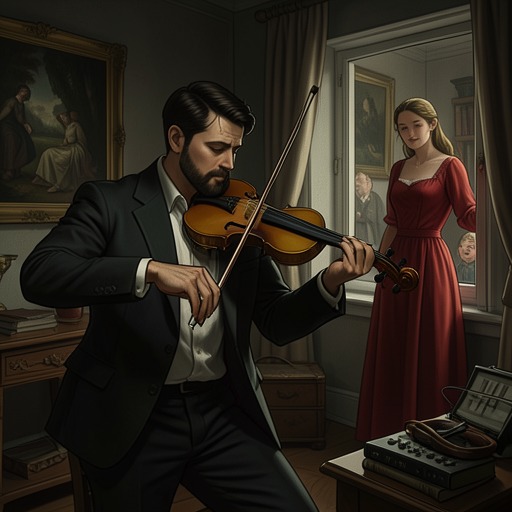
The concept appears within the musical environment associated with Assured Distraction. At a bar performance, Timbre hears a former member of Assured Distraction playing with a woman whose higher melody is supported by his rich, deep voice. Their guitars begin with precise, beautiful rhythms, and the two voices sound as though they have played together forever. The performance affects Timbre because the singers’ differences do not prevent unity; the lower and higher voices become compelling precisely through their contrast.
Her response shows that timbre is experienced physically and emotionally before it is analyzed technically. She is caught up in the sound of the paired voices and in the song’s account of a lost lover. Although she has had previous relationships, she recognizes that she has never loved anyone with the depth suggested by the performance. The music gives her an imaginative space in which listeners can attach lyrics to their own lives and feel pain they have not directly experienced. Timbre thus names both the audible distinctiveness of sound and the personal route by which music becomes emotionally meaningful.
The Name as Narrative Motif
Timbre’s name makes the musical concept inseparable from her characterization. When Hayden tells Crew that the woman he is discussing is named Timbre, Crew jokes about “timber,” while Hayden insists on the musical pronunciation and meaning. The correction establishes a small piece of family dialogue, but it also places Timbre within Hayden’s professional and personal world. Her identity is introduced to Crew through a term from the same artistic vocabulary that shapes Hayden’s work.
The name also creates a bridge between technical knowledge and human recognition. Hayden can explain the concept, but Crew’s dismissive response shows that definition alone does not guarantee understanding. Meaning develops through use and relationship. Timbre is not merely a label attached to a woman; it becomes a word whose significance Hayden explains, Crew repeats imperfectly, and the surrounding musical culture continually reinforces.
Sound, Difference, and Connection
The performance scene gives the concept its richest relational force. The singers’ voices remain individually identifiable while forming a unified musical experience, suggesting a model of intimacy based on coordination rather than erasure. Their sound seems enduring because each voice contributes something the other cannot supply. The music therefore provides a structural image for relationships in which difference is not an obstacle to closeness but one of its conditions.
This idea resonates with the book’s wider attention to emotional vulnerability. In another intimate scene, Timbre’s tears fall onto Hayden’s skin after she becomes embarrassed by her physical response. Hayden feels the tears, draws her into his arms, and offers safety without requiring her to disguise what has happened. The scene is not a direct definition of musical timbre, but it extends the concept’s logic into bodily and emotional life: feeling travels between people through particular textures of voice, touch, silence, and response. Individual sensitivity becomes the means through which connection is recognized.
Narrative and Thematic Significance
Timbre (musical concept) connects the novel’s title world, its characters’ names and professions, its live performances, and its emotional vocabulary. The book’s playlist material further places music in the structure surrounding the story, while the concert scene shows how songs can function as vessels for imagined experience. Music does not simply decorate the plot; it supplies a way for characters and readers to interpret desire, memory, and attachment.
The concept’s decisive significance lies in its refusal of interchangeable identity. A shared note does not produce a shared sound, just as shared circumstances do not make people emotionally identical. Timbre provides the novel with a language for recognizing distinctiveness within harmony: a voice can join another voice, an instrument can enter an ensemble, and a person can become part of a family or relationship while retaining a signature that cannot be replaced. Through that movement from musical score to human connection, the technical term becomes one of the book’s clearest metaphors for individuality made audible.